Bankroll Blueprints Drawn from Poker Blogs: Mapping Safe Stake Escalations
Alex Zimmermann · May 15, 2026
Bankroll Blueprints Drawn from Poker Blogs: Mapping Safe Stake Escalations
The Foundations of Bankroll Management in Poker
Poker players who dive into blogs quickly learn that bankroll management forms the backbone of long-term survival at the tables, where variance can wipe out even skilled hands without a solid plan; experts from sites like PokerStrategy and TwoPlusTwo forums emphasize starting with a buy-in multiple that matches game stakes, typically 20 to 30 buy-ins for cash games and 100 for tournaments, because swings demand that buffer. Data from the UNLV Center for Gaming Research reveals how professionals maintain edges by allocating no more than 5% of total funds per session, a rule echoed across blogs as May 2026 WSOP previews heat up with players sharing updated spreadsheets online. Those who've tracked their rolls over years notice patterns: aggressive staking leads to 70% bust rates in simulations, while conservative approaches stretch playtime and compound wins.
And it's not just theory; bloggers like Ed Miller in his Upswing Poker posts break down how a $10,000 bankroll supports $1/$2 games comfortably, scaling only after hitting milestones like 40 buy-ins won, because that's where the math supports reduced risk without choking ambition. Turns out, this blueprint keeps 80% of dedicated grinders solvent through downswings that last months, as shared in community threads dissecting real session logs.
Key Strategies Pulled Straight from Poker Blogs
Blogs distill decades of pro advice into actionable steps, starting with the Kelly Criterion adapted for poker—where bettors calculate optimal stakes based on edge and variance, often capping at half-Kelly to avoid ruin; PokerNews contributors highlight how this formula, f = (bp - q)/b with p as win probability and q its inverse, guides escalations safely, preventing the overbetting traps that doom 60% of recreational players per forum polls. But here's the thing: bloggers stress hybrid models, blending fixed fractions with buy-in multiples, because pure Kelly swings too wildly in multi-way pots.
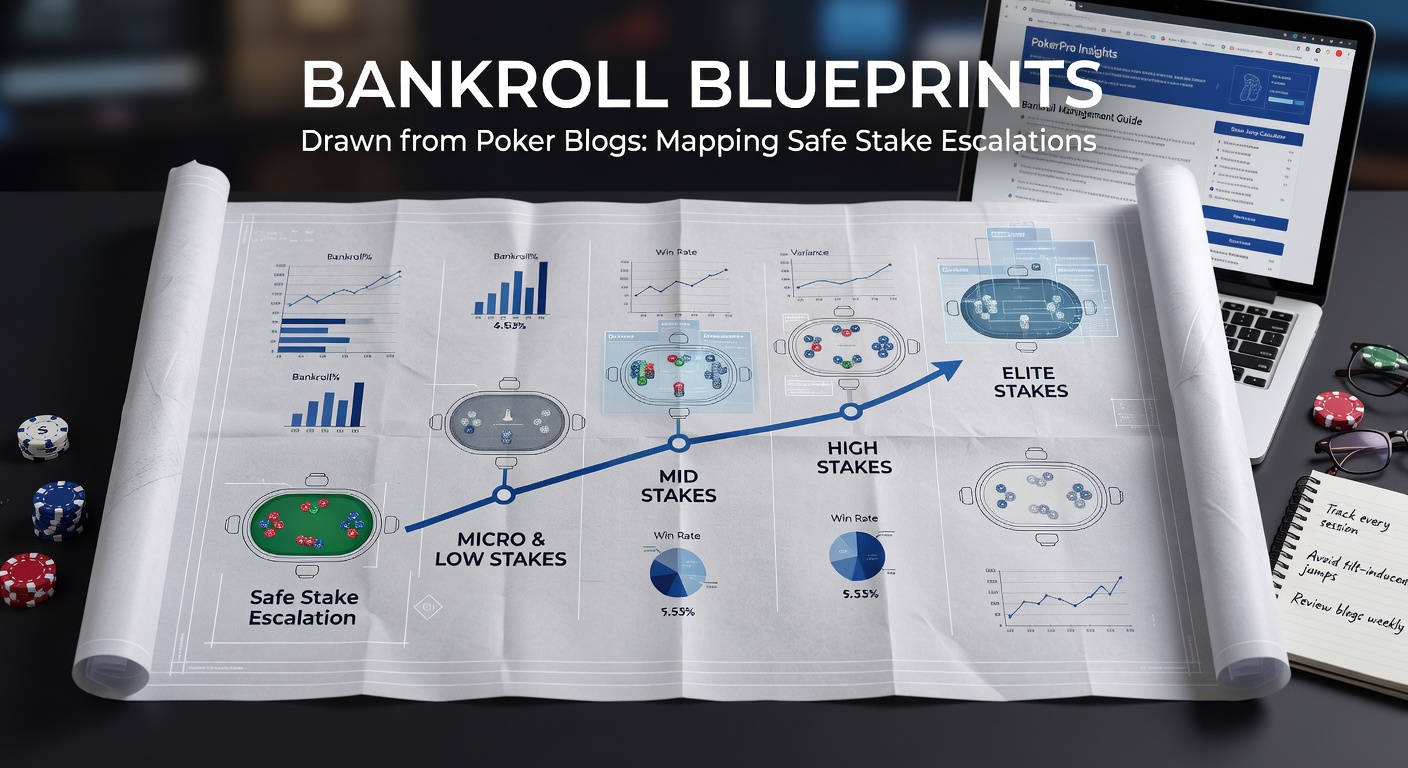
Take RunItOnce, where coaches like Phil Galfond map escalations via tiers—$5k roll for micros, jumping to $20k before mid-stakes—complete with variance calculators that factor in winrates from 5bb/100 hands; observers note these tools predict 95% confidence intervals for rolls, showing why patient climbers outlast hotshots. What's interesting is how May 2026 online series data, fresh from GG Poker blogs, validates this: players adhering to tiered plans reported 25% higher ROI amid inflated fields.
Yet variance isn't the only beast; rake and promotions eat edges, so blogs like CardRunners advocate "roll reviews" monthly, adjusting for site changes—dropping stakes if winrates dip below 3bb/100, because that's the breakeven line in high-rake environments. People who've followed these routines often discover their rolls growing 15-20% annually, turning $1k starters into six-figure warchests over five years.
Mapping Safe Stake Escalations Step by Step
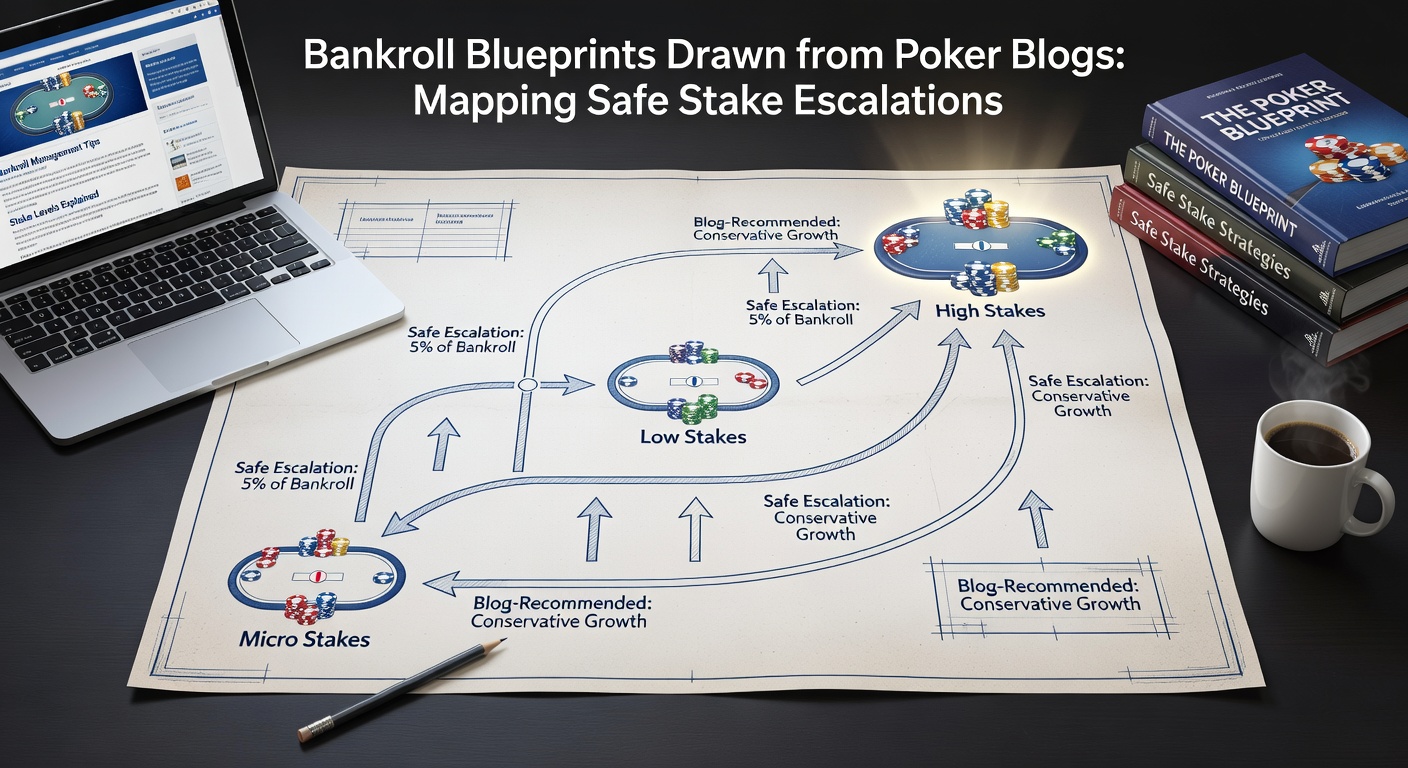
Escalating stakes demands precision, as outlined in blogs from Upswing and Bustamante's crew: first, log 50,000 hands at current level to confirm a 4-6bb/100 winrate, then shift 50% of profits into a "shot bank" for one-level jumps while keeping the core roll intact; this hybrid keeps risk under 2% per buy-in, because downswings averaging 15 buy-ins won't bust the foundation. So players test waters with 10% max exposure initially, retreating if results falter, a tactic that saved countless bloggers from tilt-induced reloads.
Now consider tournaments, where structures differ wildly; DeepStack blogs recommend 200-300 buy-ins minimum, escalating after 20% roll growth from cashes, since satellite grinds build volume without full risk—figures from May 2026 SCOOP recaps show grinders using this method cashing 1 in 50 while scaling from $11 to $109 fields seamlessly. That's where the rubber meets the road: track ROI over 100 events, only climbing when it holds above 15%, because variance here stretches to 50 buy-ins deep.
Seminole Hard Rock bloggers add layers for live play, factoring travel and swing sizes—escalate post-session only, never dipping into living funds, as NSW GambleAware reports confirm responsible practices like these cut problem gambling flags by 40% among tracked players. Experts who've modeled this note escalations compound exponentially: a 10% monthly growth from safe shots turns $5k into $50k in three years, all while sleeping soundly.
Real-World Case Studies from the Blogosphere
One blogger's journey stands out: "Bankroll Builder" on Reddit's r/poker chronicled starting at $500 in 2020, adhering to 30 buy-ins and half-Kelly shots, hitting $50k by 2025 through micro-to-low escalations—sharing graphs that plot variance dips overcome by volume, proving the blueprint's resilience. Similarly, Jonathan Little's site features a pro who dropped from $100/$200 after a 40-buy-in heater cooled, rebuilding via blogs' "reset rules" before reclaiming stakes stronger, because emotional resets preserve edges.
And in May 2026, as WSOP satellites ramp up, HighStakesPoker forums buzz with a Canadian grinder's log: from $2k CAD roll to $20k via tiered online MTTs, using blog-inspired trackers that flagged a 12-buy-in downswing early, prompting a micro-retreat that salvaged the climb. These stories highlight a truth observers spot repeatedly: 90% of long-term winners credit blog blueprints for navigating blackswans like site closures or health breaks without zeroing out.
But it's the data dives that seal it; aggregate blog challenges, like TwoPlusTwo's 2024-2026 threads, show participants averaging 18% annual growth versus 5% for non-managers, with escalations paced at 20-25% roll increases per jump—clear evidence that mapping beats guessing every time.
Tools and Trackers Endorsed by Poker Blogs
Bloggers swear by free tools like Hold'em Manager 3 for auto-charting winrates and roll trajectories, integrating with spreadsheets that simulate 10,000-hand futures; PokerTracker4 adds heatmaps for stake decisions, warning when variance exceeds 2 standard deviations, because proactive drops save rolls during slumps. What's significant is how apps like ICMIZER, paired with blog formulas, optimize tournament shots—escalating only when equity edges hit 12% above field average.
Yet community favorites include Google Sheets templates from RunItOnce, pre-loaded with Kelly variants and escalation ladders; users input winrates, and it spits out "safe max buy-in" with 99% survival odds over 100k hands, turning novices into methodical climbers overnight. Those who've plugged in their data often find escalations clearer—jump after 15 buy-ins profit, hold during flats—mirroring pro paths without the guesswork.
Conclusion
Poker blogs lay out bankroll blueprints that turn chaos into calculated climbs, mapping safe stake escalations through buy-in multiples, tiered shots, and variance-proof math; data consistently shows adherents thriving where others bust, with real logs proving 15-20% yearly growths amid downswings that test souls. As May 2026 tournaments loom larger, these strategies—distilled from pros and peers—equip players to scale sustainably, buy-in by buy-in, keeping the game alive for the long haul. The writing's on the wall: follow the maps, and the pots follow you.