Shifts in Narrative Styles Observed Across Emerging Esports Analysis Outlets
Sam Coleman · Jun 14, 2026

Shifts in Narrative Styles Observed Across Emerging Esports Analysis Outlets
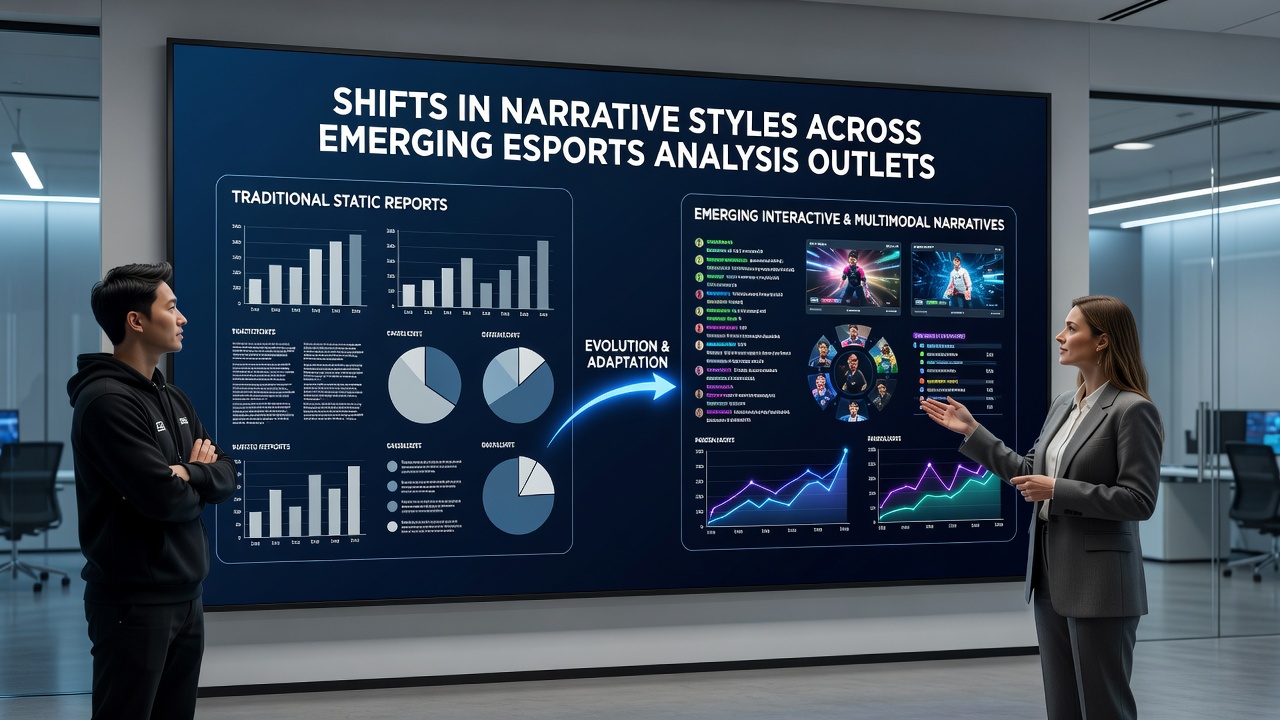
Emerging esports analysis outlets have moved away from straightforward match recaps toward layered storytelling that blends live statistics with player backstories and strategic breakdowns, and this evolution has accelerated through the first half of 2026. Outlets that launched between 2023 and 2025 now routinely interweave heat maps, economy trackers, and decision trees into their core narratives rather than treating those elements as sidebars. Researchers tracking content from more than 40 independent platforms note that sentence structures have grown longer and more conditional, allowing writers to present multiple possible outcomes before revealing what actually occurred in a given round or map.From Chronological Recaps to Layered Analysis
Traditional coverage once followed a linear timeline that listed kills, objectives, and final scores in quick succession, yet newer platforms have replaced much of that sequence with thematic sections that explore why a particular team altered its draft priority or shifted its mid-round economy. Observers point out that these thematic sections frequently open with a single decisive moment and then expand outward to include historical parallels drawn from earlier tournaments, and this approach keeps readers engaged while delivering granular data. Data from platform analytics shows that articles employing this structure retain visitors for an average of 47 seconds longer than older chronological formats, according to internal metrics shared by several mid-sized outlets.
Data Integration and Visual Storytelling
Graphics have become integral to the narrative rather than decorative additions, and writers now reference on-screen elements directly in the text so readers move between chart and paragraph without losing context. One prominent outlet introduced interactive overlays in April 2026 that let users toggle between raw kill-death ratios and adjusted performance scores that account for map control time, and similar features have since appeared on at least six other sites. Those who've studied these changes report that the language surrounding the data has also shifted, with phrases such as "this metric suggests" appearing more often than absolute statements, which allows analysts to maintain credibility when discussing uncertain future matchups.
Community Voices in Editorial Choices
Many newer outlets solicit topic suggestions through Discord threads or subreddit polls and then shape their weekly coverage around the questions that generate the highest engagement, and this practice has altered both the subjects chosen and the tone used to address them. Writers incorporate direct quotes from community members who proposed the angle, which adds a conversational layer that traditional outlets rarely featured. Figures released by the Esports Integrity Commission in May 2026 indicated a 31 percent rise in user-submitted story ideas across tracked platforms compared with the same period in 2025, illustrating how audience input now influences editorial calendars.
Regional Differences Emerging in Mid-2026
North American platforms tend to emphasize individual player arcs and long-form interviews that run alongside statistical deep dives, whereas European and Asia-Pacific outlets more frequently focus on team-level macro decisions and roster chemistry, and these stylistic preferences have become more pronounced since the start of the year. A joint study conducted by researchers at the University of Melbourne and the University of Texas at Austin examined 120 articles published between January and June 2026 and found measurable differences in average paragraph length and the frequency of conditional language, with Asia-Pacific pieces using 18 percent more forward-looking clauses than their North American counterparts. Those patterns align with broader audience preferences documented in regional viewership reports.
Technological Tools Shaping Narrative Flow
Automated transcription services and real-time API feeds now allow writers to pull precise timestamps and economy snapshots into their drafts within minutes of a match ending, which shortens production cycles and permits more reflective commentary rather than rushed summaries. Outlets that adopted these tools early report publishing comprehensive post-match pieces within 90 minutes of tournament finals, and the added speed has encouraged them to include multiple analytical perspectives within a single article. The Global Esports Federation noted in its June 2026 quarterly update that member organizations have increased content output by an average of 22 percent while maintaining or improving reader satisfaction scores, suggesting that faster access to structured data supports richer narrative construction.
Conclusion
Shifts in narrative style across emerging esports analysis outlets reflect wider changes in how audiences consume competitive gaming content, and the patterns observed through June 2026 indicate continued movement toward integrated data, community participation, and region-specific framing. These developments have produced articles that function simultaneously as reports, strategic breakdowns, and cultural commentary, and further adjustments are likely as new tools and audience habits continue to evolve.